
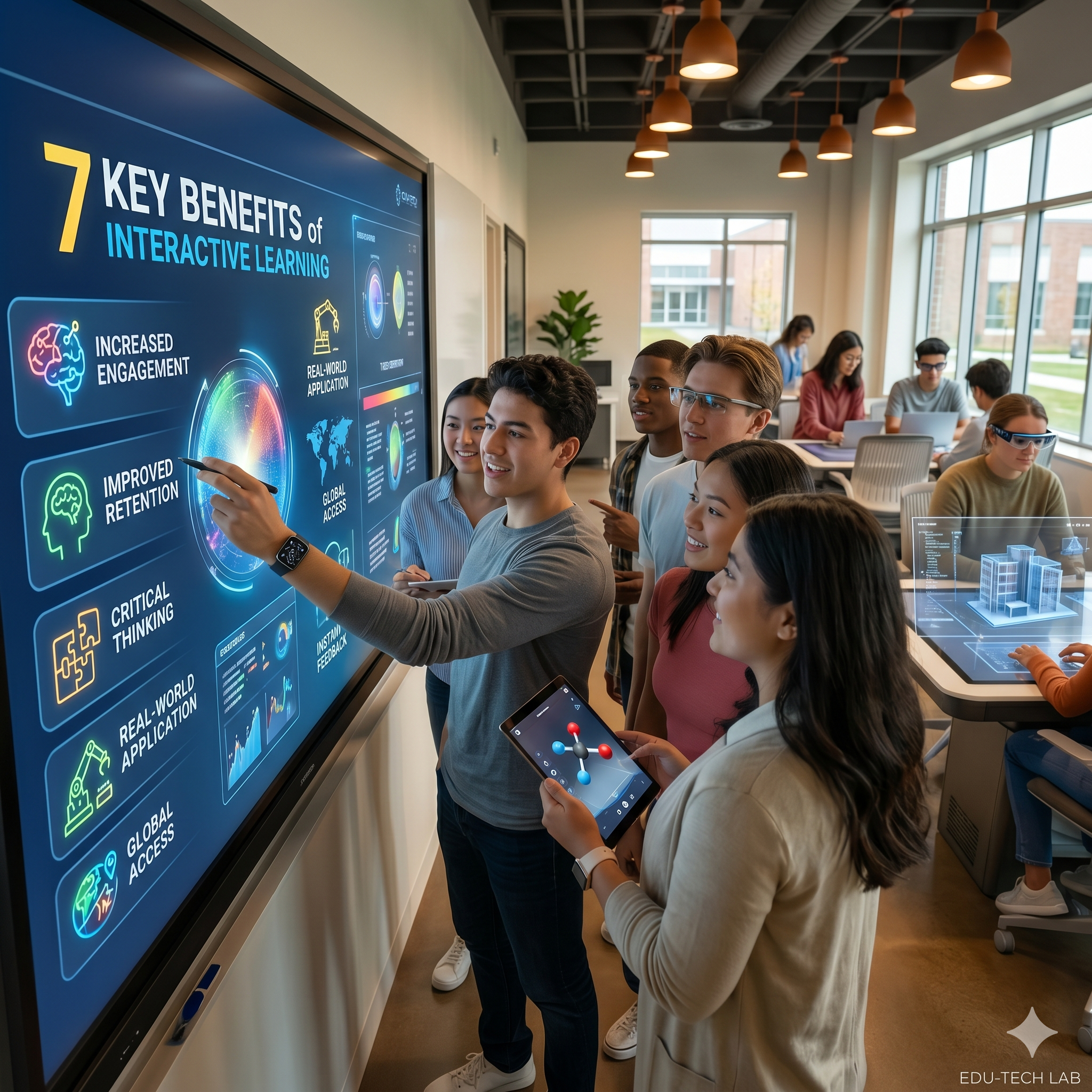
7 Powerful Benefits of Interactive Learning for Students
- Posted by IntelliaSG
- Date April 29, 2026
- Categories Blog
- Comments 0 comment
Education is rapidly evolving. Traditional classrooms that rely only on lectures, textbooks, and note-taking are gradually giving way to interactive learning experiences that engage students more deeply.
For decades, students were expected to sit quietly, listen, and memorize information. But research and modern educational practices show that students learn far better when they actively participate in the learning process.
Interactive learning transforms education from a passive activity into an engaging, dynamic experience. Instead of simply absorbing information, students explore, question, experiment, and apply concepts.
At Intellia, we believe that learning should spark curiosity and build deep understanding. Interactive learning plays a key role in making that possible.
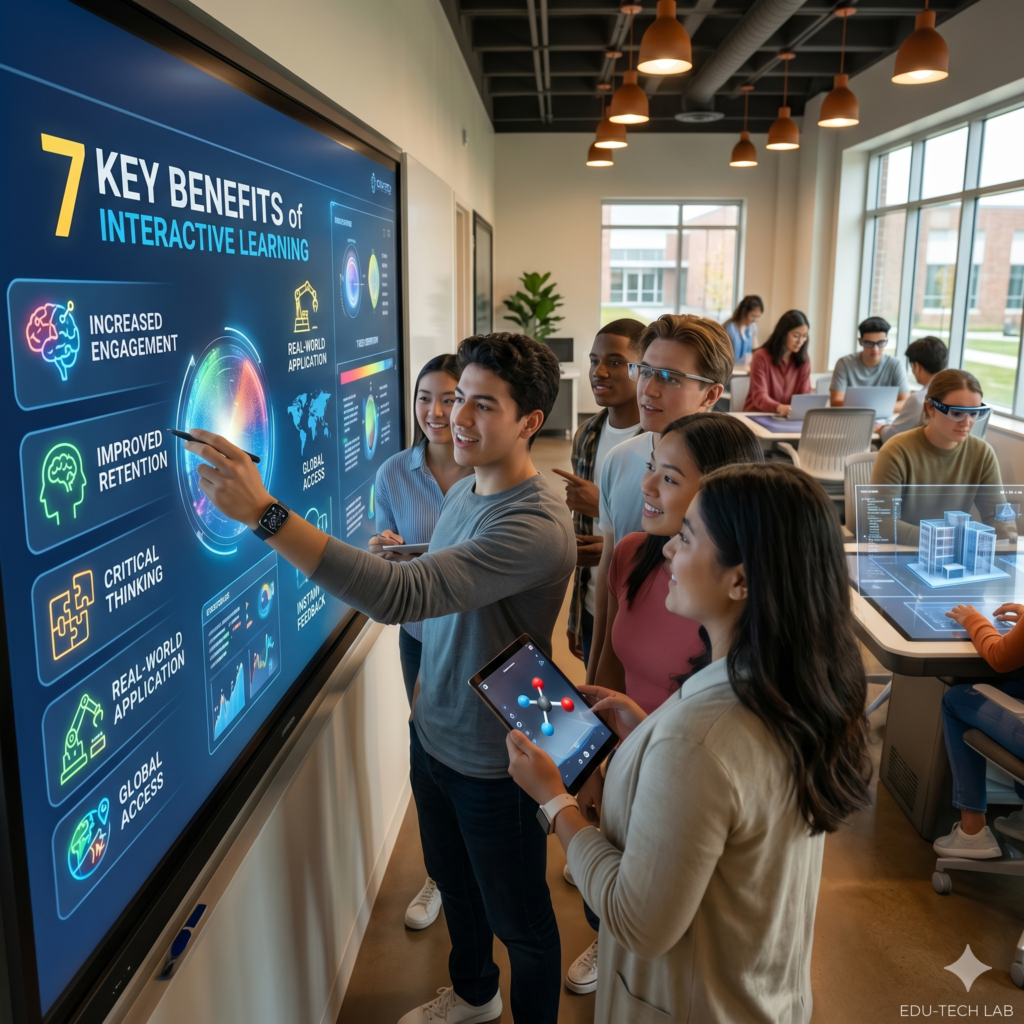
Let’s explore the 7 powerful benefits of interactive learning for students and why it is shaping the future of education.
1. Interactive Learning Improves Conceptual Understanding
One of the biggest challenges students face is understanding complex concepts. Traditional teaching methods often emphasize memorizing formulas, definitions, and procedures.
Interactive learning changes this approach.
When students participate in discussions, activities, and problem-solving exercises, they begin to understand how and why concepts work rather than simply remembering them.
For example, in mathematics, solving puzzles, visualizing problems, and experimenting with numbers helps students understand the logic behind formulas. This deeper understanding makes it easier to apply knowledge in different situations.
At Intellia, the focus is always on concept-first learning, ensuring that students truly understand ideas before moving to advanced applications.
2. Students Retain Information for Longer
Have you ever noticed how quickly students forget information after exams?
This happens because passive studying often leads to short-term memory retention. When students simply read notes or listen to lectures, the brain does not engage deeply with the material.
Interactive learning solves this problem.
Activities such as discussions, problem-solving tasks, quizzes, and collaborative learning stimulate multiple areas of the brain. This deeper engagement helps students remember information for a much longer time.
Studies consistently show that active participation significantly improves knowledge retention, making interactive learning far more effective than passive studying.
3. Interactive Learning Makes Education More Engaging
Many students lose interest in subjects when learning feels repetitive or monotonous.
Interactive learning brings excitement into education.
Instead of passively listening, students actively participate through:
- discussions
- games and challenges
- problem-solving activities
- real-world examples
- collaborative learning
These elements transform learning into an engaging and enjoyable experience.
When students enjoy learning, their motivation naturally increases. This leads to better focus, improved performance, and a stronger desire to explore new ideas.
At Intellia, learning environments are designed to keep students curious, motivated, and engaged throughout their educational journey.
4. Interactive Learning Develops Critical Thinking Skills
In today’s world, success requires more than just remembering information. Students need to develop critical thinking and analytical skills.
Interactive learning encourages students to:
- ask questions
- analyze problems
- explore multiple solutions
- think logically
For example, when students are given a challenging math problem and asked to discuss different ways to solve it, they develop stronger analytical abilities.
Instead of simply following steps, they begin to think independently and evaluate different approaches.
These critical thinking skills are essential not only for academic success but also for solving real-world challenges.
5. Interactive Learning Builds Confidence in Students
Many students hesitate to participate in class because they fear making mistakes.
Interactive learning creates an environment where experimentation and curiosity are encouraged.
When students engage in discussions, group activities, and guided problem-solving, they gradually become more comfortable expressing their ideas.
This process builds confidence in their abilities.
As students gain confidence, they are more likely to:
- attempt challenging problems
- ask questions
- participate actively in learning
Confidence is a powerful driver of academic success, and interactive learning helps nurture it naturally.
6. Interactive Learning Encourages Collaboration
Learning is often more effective when students work together and share ideas.
Interactive learning promotes collaboration through group discussions, teamwork, and peer learning.
When students collaborate, they gain exposure to different perspectives and problem-solving strategies.
For example, one student may approach a math problem logically, while another might visualize it differently. By discussing their approaches, both students deepen their understanding.
Collaboration also helps students develop communication skills and teamwork abilities, which are essential for future careers.
Interactive classrooms create a supportive learning community where students learn with each other, not just from teachers.
7. Interactive Learning Prepares Students for the Future
The future demands individuals who can think creatively, solve problems, and adapt to new challenges.
Interactive learning helps develop these abilities by encouraging students to actively explore knowledge rather than passively receive it.
Through activities, discussions, and problem-solving experiences, students develop skills such as:
- analytical thinking
- creativity
- adaptability
- collaboration
- decision-making
These skills are essential not only for academic success but also for thriving in modern careers.
At Intellia, the goal is to prepare students not just for exams but for lifelong learning and real-world challenges.
Why Interactive Learning Is the Future of Education
Education is moving away from traditional lecture-based systems toward dynamic and student-centered learning environments.
Interactive learning empowers students to take an active role in their education. It transforms classrooms into spaces where curiosity, exploration, and creativity flourish.
When students engage deeply with what they learn, they develop a strong foundation of knowledge and skills that stays with them for years.
The Intellia Approach to Interactive Learning
At Intellia, learning is designed to be engaging, concept-driven, and interactive.
Our approach focuses on:
Concept-First Learning
Students understand the logic behind every concept before applying formulas or procedures.
Active Participation
Students engage in discussions, exercises, and problem-solving activities that reinforce understanding.
Real-Life Applications
Concepts are connected to real-world scenarios to make learning meaningful.
Guided Practice and Feedback
Students receive continuous support to strengthen their confidence and abilities.
This approach ensures that students move beyond rote memorization and develop true mastery of concepts.
Final Thoughts
Interactive learning is transforming education by making it engaging, effective, and meaningful.
By actively participating in the learning process, students develop deeper understanding, stronger retention, and valuable life skills.
The 7 powerful benefits of interactive learning—better understanding, improved retention, higher engagement, critical thinking, confidence, collaboration, and future readiness—make it clear why this approach is becoming the foundation of modern education.
At Intellia, we believe that when students are actively involved in learning, education becomes more than just studying—it becomes discovery.
And when curiosity leads the way, learning becomes limitless.

You may also like
5 Simple Ways to Make Math Interesting for Children
Many children grow up believing that math is difficult, boring, or something meant only for “smart” students. In reality, math becomes challenging mainly when it is taught through memorization instead of understanding. When children experience math through curiosity, exploration, and …